
Beyond the Click: How One Marketer Is Rebuilding What Happens After the Lead
9+ years into a career that started in SEO and paid ads, Akit Sagar’s focus has shifted toward a harder problem: what happens to a customer after the campaign ends.
Akit Sagar has spent more than 9+ years working across the core disciplines of digital marketing — search engine optimization, Facebook and paid social advertising, WhatsApp marketing, and email campaigns. In that time, he says he has built or contributed to more than 1000+ websites for clients spanning national and international projects, including work for Visual Physics and the International Society for Folk Narrative Research (ISFNR). His journey combines hands-on industry experience, entrepreneurship, education and consulting, positioning him as a professional who understands digital marketing from both strategic and practical perspectives.
At the heart of his professional journey is a commitment to helping businesses understand and use digital platforms more effectively.
Building the machinery behind the lead
Alongside his marketing work, Sagar has spent recent years developing an internal sales and operations system for a vehicle-telematics company — a system connecting lead management, sales, order processing, inventory, fulfillment, and accounting into a single workflow, with separate dashboards built for salespeople, administrators, and fulfillment staff.
According to Sagar, the system replaced a setup in which lead, sales, and inventory data lived across disconnected spreadsheets and tools, requiring manual coordination between departments to track a single order from lead to delivery. That claim describes the problem the system was built to solve;
Separately, Sagar has also begun contributing to the company’s core product: an application connecting dash-camera hardware to a centralized platform, intended to combine vehicle location, video, and AI-generated alerts into a single interface a fleet manager can act on. He describes this as a shift in his own role — from marketing a hardware product to helping build the software layer that makes it useful.
He continues to manage the same company’s presence across e-commerce and B2B marketplaces, including IndiaMART, Justdial, Amazon, and Alibaba, alongside several company websites and ongoing WhatsApp marketing — meaning his day-to-day work still spans both ends of the process he describes: generating the lead, and building what happens to it afterward.
Digital Pilots and a bet on integration
Sagar’s broader professional thesis is expressed through Digital Pilots, a digital-growth practice he operates independently of his telematics-sector work. Its stated scope covers SEO, answer-engine optimization (AEO), generative-engine optimization (GEO), performance marketing, website development, CRM integration, WhatsApp and social media marketing, UI/UX design, and AI-driven automation for functions like lead routing, CRM updates, and customer support.
According to Digital Pilots’ own materials, the practice represents more than 12+ years of combined digital experience, has worked with over 800+ clients and projects across six or more countries, and has built more than 200+ automations and workflows.
Sagar’s underlying argument — one increasingly common in the industry but genuinely central to how he frames his own work — is that SEO, advertising, CRM, and automation function best as a single connected system rather than as separately purchased services. As search itself shifts toward AI-driven answer engines, he positions AEO and GEO work (optimizing for how AI systems surface and summarize a business, rather than only how search engines rank it) as a natural extension of traditional SEO rather than a separate discipline.
A stated position on AI: use it selectively, not by default
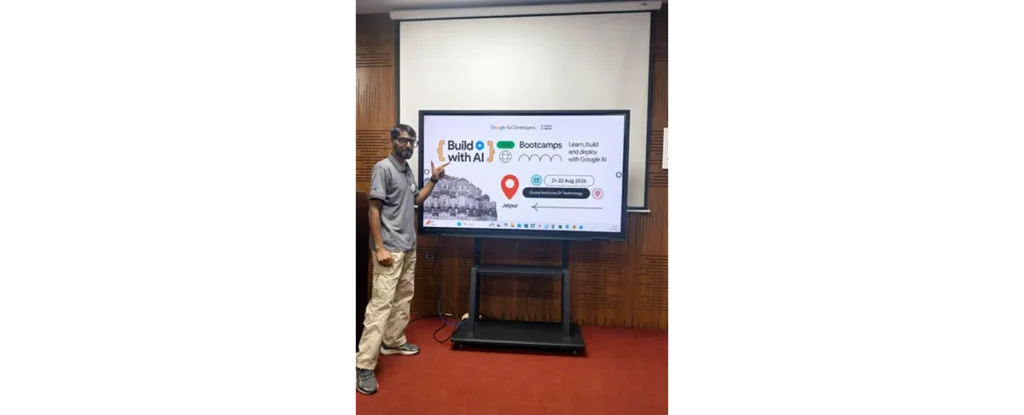
Sagar has completed a certification in Generative AI through IIT Patna, along with coursework through OpenAI Academy covering AI foundations and agentic workflows, and separate programs in generative AI and automation through Outskill and Digital Scholar.
More notable than the credentials themselves is the position he has taken on applying them. In his account, AI automation is most useful when it removes a specific, repetitive step from an existing business process — routing a lead, updating a CRM record, triggering a WhatsApp follow-up — rather than being adopted as a general-purpose upgrade. He describes evaluating, in his own systems work, whether a simpler rule-based approach or a trained model performs better on a given task, and says the simpler approach has sometimes won.
That same philosophy extends to how automated systems are meant to be used once built: in his description, they are designed to surface a recommendation — a follow-up call, a message, a flag for review — while leaving the decision with a person, rather than acting autonomously.
- Digital Pilots: https://digitalpilots.in/
- Akit Sagar – LinkedIn: https://www.linkedin.com/in/akitsagar/